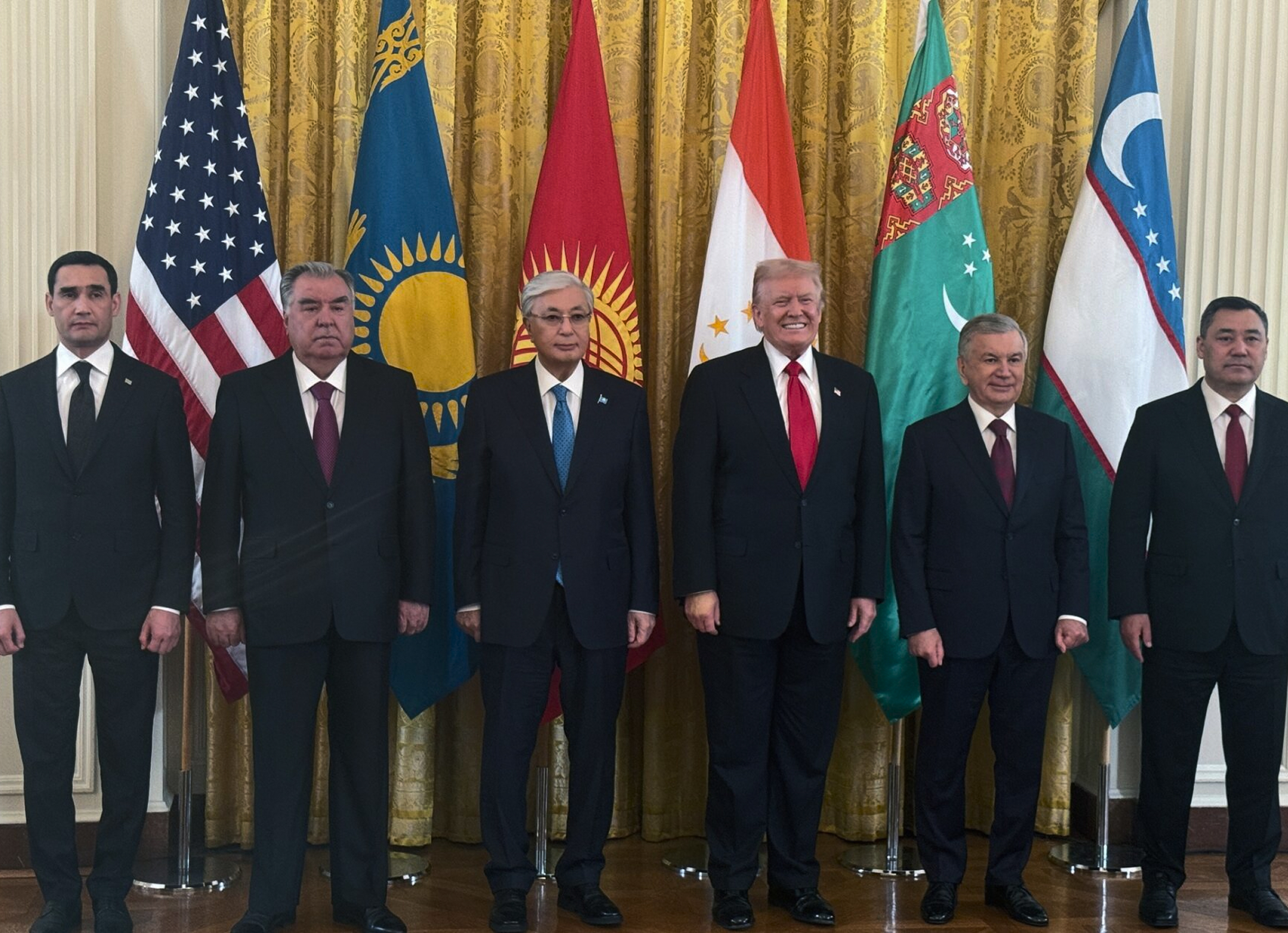
Central Asia’s Strategic Rush to Washington: Lessons for Mongolia
Mar 3, 2026
Ariunzaya O.

For much of the post-9/11 period, the diplomatic relationship between the U.S. and the five republics of Central Asia – Kazakhstan, Kyrgyzstan, Tajikistan, Turkmenistan, and Uzbekistan – was heavily shaped by security cooperation related to Afghanistan. However, between 2024 and today, the region moved from broader diplomacy to an accelerated era of deal-making. At the heart of this transition lies the race for critical raw minerals.
As the U.S. aims to decouple its supply chains from Moscow and Beijing, Central Asia, home to vast reserves of uranium, copper, gold, and rare earths, has recognized a historic window of opportunity. The timeline of the engagement between the U.S. and Central Asia reveals a rapid evolution from mere diplomacy to tangible partnerships.
The Escalating Relations between the U.S. and Central Asia
In February 2024, the inaugural C5+1 Critical Minerals Dialogue set the objective of increasing the region’s involvement in global supply chains and strengthening economic cooperation. This was shortly followed by the inaugural B5+1 Forum in Almaty, a private-sector-led counterpart designed to facilitate public-private dialogue to “foster enhanced U.S.-Central Asia economic partnership.” Later in the year, the U.S. and Uzbekistan signed an initial Memorandum of Understanding (MoU) on critical minerals.
The turning point, however, arrived in November 2025 during the C5+1 Summit. Marked by a significant elevation in economic partnerships and deals, the Summit aligned with the Trump administration’s interest in strengthening American national and economic security through trade and investment in developing nations.
This shift produced immediate results during the “Deal Zone,” a dedicated event at the Summit where over $25 billion commercial deals were announced between the U.S. and C5 nations. The event was particularly fruitful for Kazakhstan and Uzbekistan – Cove Capital’s partnership with Kazakhstan to privatize the tungsten mining company Severniy Katpar represented a "once-in-a-generation" agreement to develop the world’s largest untapped tungsten resource. While the immediate transaction is valued at over $1 billion, the mineral deposits are worth more than $80 billion, setting a new standard for U.S.-Kazakhstan critical minerals cooperation.
Similarly, for Uzbekistan, prospective deals were outlined for rare earth projects. The U.S. secured rights of first refusal on co-developed deposits and will assist in mineral mapping, supported by a $400 million commitment to strengthen bilateral supply chains. These agreements mark the first major U.S. investment in Central Asia’s "non-energy" mining sector.
Furthermore, the Summit’s agreements provided a pathway for Central Asian nations to diversify their economies and move away from their traditional dependencies on Russia and China. They are securing long-term economic viability via investments in transportation and trade infrastructure, and the U.S. is supporting this shift by equipment and technology transfers through investments in U.S. companies, including in information technology and artificial intelligence.
This momentum has carried into 2026. In February 2026, Washington launched Project Vault, a $12 billion strategic mineral reserve designed to stockpile key materials and mitigate supply risks. Supported by a $10 billion EXIM Bank loan, this initiative signals a broader opportunity for Central Asia, as EXIM maintains $100 billion in financing capacity to support U.S. and allied supply chains, including mining, processing, and infrastructure projects. For the region, this creates another potential path to secure U.S. capital for expanding critical minerals cooperation. Coinciding with this period and building on the previous MoU, Uzbekistan and the U.S. signed a new MoU on strengthening cooperation in the supply, extraction, and processing of critical minerals and rare earths, formalizing cooperation at a higher political level.
These Results Did not Happen by Chance
How did these nations manage to effectively bring about this elevation in relations? Central Asian nations are no longer waiting for Washington to notice them; instead, they are amping up their lobbying efforts to “capitalize on renewed access” to the Trump administration. Last January, the Embassy of Kazakhstan signed a $275,000-per-month contract with Continental Strategy, a lobby firm founded by a former Trump campaign adviser. Uzbekistan moved just as fast, hiring Forward Global for strategic communications during the C5+1 2025 Summit to “amplify President Shavkat Mirziyoyev's attendance at the White House dinner.” A week later, the state-owned Uzbekneftegaz retained Ballard Partners, an American lobbying firm noted for its ties to the Trump administration, in a five-year deal worth up to $5 million.
Beyond traditional firms, Central Asian nations appear to be increasingly utilizing Washington-based think tanks for “unofficial lobbying” purposes, leveraging these organizations to further their strategic agendas and economic interests. The Caspian Policy Center (CPC), for instance, often serves as a high-level platform to help bridge the gap between regional leaders and American policymakers.
Besides tangible deals, these efforts have yielded considerable diplomatic results. In December 2025, President Trump invited the heads of Kazakhstan and Uzbekistan to the G20 Summit in Miami later in 2026, a recognition that signals that Central Asian nations are successfully rebranding themselves from peripheral post-Soviet republics to essential players at the global stage.
What is the Lesson for Mongolia?
Although rich in minerals and energy, the five nations of Central Asia remain economically tied to Russia while China has expanded its influence in the region through massive infrastructure and mining investments. This “geopolitical sandwich” is a mirror image of the reality facing Mongolia. Central Asia’s efforts over the past two years thus offer a possible roadmap for Mongolia, a “Third Neighbor” democracy seeking to maintain sovereignty while nestled between the same two giants.
The primary lesson is that the Trump administration’s approach is much more narrowly focused on economic and commercial matters, where achievements are defined by tangible “dollar amounts” and the strengthening of America’s own national and economic security. With China imposing restrictions on rare earth exports and maintaining a dominant role in mineral processing, the U.S. is making a strategic bet on alternative sources. Central Asia has not been sitting idly in these matters; the region has taken the initiative in convincing Washington that the alternative of leaving Central Asia as a “quarry for China or a hostage to Russia” as both “shortsighted and strategically foolish.”
Mongolia, like its Central Asian counterparts, has abundant critical minerals and rare earths. However, as the recent surge of high-priced lobbying contracts and think-tank forums proves, diplomatic advancements and large-scale deals do not come easily if a nation does not first make an effort to be noticed.
In February 2026, the U.S. Trade and Development Agency signed an agreement with Mongolia to enhance aviation safety, supporting Mongolia in achieving U.S. Federal Aviation Administration Category 1 (CAT 1) safety rating. Achieving CAT 1 status will not only enable direct flights between the two countries, but also help establish a strategic air corridor for the transport of critical minerals and rare earth oxides, independent of neighboring countries.
However, aside from a few isolated initiatives like this, tangible progress in Mongolia-U.S. economic and trade relations remains limited. A key example is the “Mongolia Third Neighbor Trade Act,” which seeks to provide duty-free access for Mongolian cashmere products to the U.S. market. Although introduced in 2023, the bill has been stalled for three years.
The global competition for critical minerals presents Mongolia with a real opportunity to elevate its relationship with the U.S. If Mongolia can effectively leverage its critical mineral resources, it could foster growth not only in the mining sector but across other areas of the economy as well.
Central Asia has shown that to succeed in this era, a nation must:
- Move from “begging" to "bargaining”: Rather than seeking general aid that does not directly advance U.S. economic interests, Mongolia must present its mineral wealth as a solution to American supply chain vulnerabilities.
- Engage in strategic lobbying: Currently, Washington has very little deep knowledge of Mongolia. To capitalize on this moment, our leaders should proactively engage in efforts to ensure U.S. policymakers know exactly what Mongolia can offer. Making key decision-makers aware of the country’s potential is the necessary first step toward securing high-level interest.
- Aggressively implement domestic reforms: To attract the level of investment seen in Kazakhstan and Uzbekistan, Mongolia must prioritize improving its own domestic investment environment. By becoming more investor-friendly, providing legal certainty, and actively fighting corruption, Mongolia can build a far stronger case for foreign investors.
In a world of intensifying great-power rivalry, Canadian Prime Minister Mark Carney offered a blunt warning that serves as a perfect summary for landlocked, resource-rich nations: “If we're not at the table, we're on the menu.” For Mongolia, Carney’s vision provides a dire warning about the future to come. If Mongolia can adopt a similarly proactive, deal-oriented stance like Central Asian nations and position its vast mineral wealth as a critical solution for Western supply-chain resilience, it may indeed be taken off the menu.
Loading ...
.png)