The Investors Waking Up to Biodiversity Finance
Apr 27, 2026
Nandin-Erdene E.
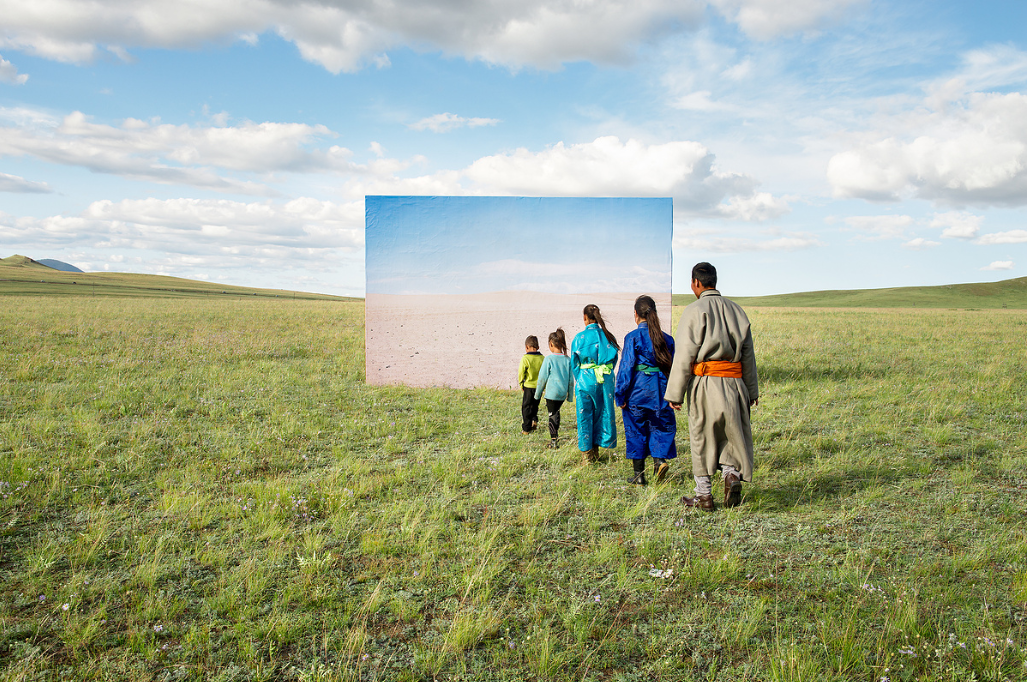
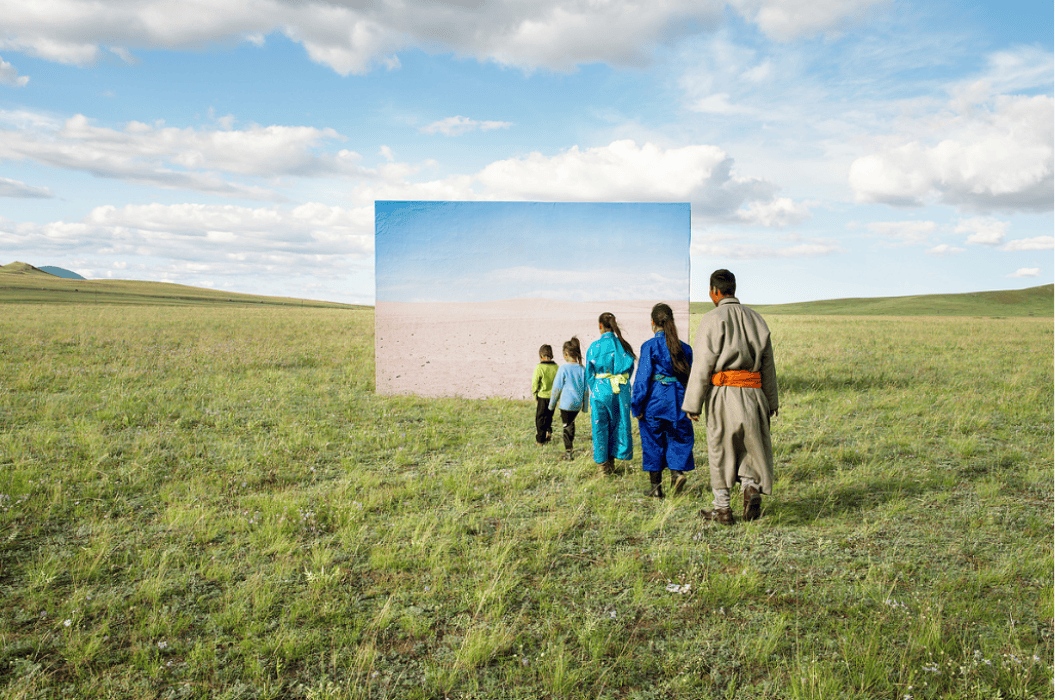
Photo credits: Copyright © Daesung Lee. All rights reserved
Over half the world's GDP depends on nature. Yet the financial system has only begun to reckon with what biodiversity loss truly costs and what restoring it could unlock.
The Scale of What We Stand to Lose
For decades, nature was treated as a backdrop to economic activity. Abundant, self-renewing, free. That assumption is now unravelling. The World Economic Forum has quantified the exposure: USD 44 trillion of economic value generation, over half the world's total GDP, is moderately or highly dependent on nature and its services. When ecosystems fail, economies follow.
The evidence of failure is already accumulating. Since 1970, the Living Planet Index, a composite measure of the world's biodiversity, has declined by nearly 70%. Fourteen key ecosystem services are currently in decline. 70% of all ice-free land has already been altered, directly impacting more than 3.2 billion people. At current trajectories, 90% of land will bear significant human imprint by 2050.
-1.png)
Land degradation alone is a crisis of extraordinary proportions. More than 100 million hectares of productive land are lost every year — an area roughly the size of Egypt. Two billion tons of sand and dust enter the atmosphere annually, originating largely in fragile dryland ecosystems. By 2050, three out of four people worldwide are projected to face drought conditions. The decade spanning 2017 saw drought affect at least 1.5 billion people at a global cost of USD 125 billion.
The health dimensions compound these losses. Outdoor air pollution, much of it linked to land degradation, caused 4.2 million premature deaths in 2019, 89% in low- and middle-income countries. Desertification and ecosystem collapse weaken land's ability to retain water, driving food insecurity and enabling the spread of infectious diseases including cholera, malaria, and zoonotic pathogens. Future pandemics, the research warns, could cost the world USD 2 trillion annually, a risk that could be substantially mitigated for just 1% of that sum through ecosystem restoration.
“Every dollar invested in restoration generates up to $30 in benefits.” (UNEP)
Why This Is Now a Financial Issue
Biodiversity finance is, in the words of practitioners, the next frontier after climate finance: less mature, less standardized, but moving rapidly into the mainstream of investment strategy, corporate risk management, and financial regulation.
Biodiversity loss creates two distinct categories of financial risk. Physical nature risk encompasses direct impacts from ecosystem degradation — reduced crop yields, fisheries collapse, intensified flooding, and the loss of services that ecosystems provide for free. Transition nature risk captures the financial consequences of regulatory change, shifting consumer preferences, new technologies, and litigation as economies pivot toward nature-positive models.
-1.png)
Markets are beginning to price these risks. Commodities with greater exposure to biodiversity-intensive production earn higher expected returns, even after adjusting for standard risk factors, as investors demand compensation for holding assets tied to biodiversity degradation. Biodiversity loss is increasingly behaving like a priced systematic risk factor, analogous to carbon transition risk in climate finance.
At the firm level, high nature dependence is associated with greater risk and more frequent nature-related ESG incidents. At the asset level, areas with higher biodiversity command persistent price premia in residential and commercial real estate, functioning as a valued amenity directly capitalized into land values.
Corporate awareness is tracking these shifts. A recent study on corporate nature risk perceptions found that nearly half of international corporate managers now view nature-related risks as financially material, with many already seeing direct operational impacts. Seventy percent of US financial market participants believe that physical and transition biodiversity risks are financially material.
Early Investments in Water by World Presidents and Tycoons Were No Coincidence
Long before "water scarcity" entered mainstream financial vocabulary, a quiet pattern was taking shape. The world's most connected people were buying aquifers and securing water rights, not as speculation, but as a deliberate conviction that freshwater would become the defining resource crisis of the century.
In 2005 and 2006, the Bush family acquired nearly 300,000 acres in remote Paraguay, sitting directly above the Acuifero Guaraní, the world's largest freshwater aquifer. No explanation was offered. The land purchase spoke instead.
T. Boone Pickens was equally direct. Through Mesa Water, he accumulated rights over the Ogallala Aquifer in Texas, becoming the largest private water holder in the United States. His thesis was characteristically blunt: a USD 75 million bet he projected would return over USD 1 billion. "Water," he said, "is the new oil."
A Hong-Kong billionaire, Li Ka-shing, acquired Northumbrian Water in the UK for USD 3.9 billion. Warren Buffett took a major stake in Nalco, the leading water treatment technology company. Goldman Sachs, Blackstone, JP Morgan, and Barclays quietly consolidated positions in water utilities and engineering firms across multiple continents.
None of it was coincidence. It was pattern recognition at the highest level.
What They Saw
The thesis was not complex. They could read the trajectory: accelerating land degradation, a global population racing toward 10 billion, food demand set to rise 50% by 2050, and the natural systems that filter and replenish freshwater quietly collapsing under the pressure. They understood, before markets did, that water is not merely a commodity, it is the connective tissue of every ecosystem that economies depend on.
And beneath that conviction was something deeper: an intuitive grasp of what biodiversity loss actually means at scale. Healthy aquifers depend on intact ecosystems. Grasslands, forests, and wetlands don't just sit above water, they regulate it, store it, and replenish it. When biodiversity degrades, water follows.
Benefits Beyond Balance Sheets
-2.png)
A sustainable transition of food, land, and ocean use, infrastructure, and energy could create USD 10.1 trillion in annual business opportunities and 395 million new jobs by 2030. The investment case is reinforced by evidence that rangelands which cover more than half the Earth's land surface and support the direct livelihoods of around 500 million people remain among the planet's most overlooked and increasingly degraded ecosystems, representing significant untapped restoration potential.
-1.png)
Preventing top-soil loss in Africa alone could generate nearly USD 1 trillion over the next 15 years, compared to losses of up to USD 2 trillion without action. The arithmetic of inaction is stark.
Urgency Faced by Mongolia:
Mongolia is not a future warning; it is a present reality. With nearly 77% of its total land area affected by desertification, and over 87% of that degradation driven by human activity, Mongolia sits at the sharpest edge of the global biodiversity and land degradation crisis.
But what makes Mongolia's case particularly stark is the speed of its climate trajectory. Annual mean temperatures have risen 2.46°C between 1940 and 2022, making Mongolia one of the fastest-warming countries on Earth. Under high-emission scenarios, temperatures could rise a further 5°C by end of century, compounding droughts and heatwaves already straining the land beyond recovery.
The consequences are cascading. Rising temperatures and erratic precipitation have dried up hundreds of lakes and rivers, with rainfall in the central region falling by 10–30%. Evaporation is outpacing recharge. As of 2015, 1.15 million people, 38% of the population, were directly exposed to land degradation, and 428,000 to chronic drought.
The pressure is reshaping the country's human geography. Rural-to-urban migration is accelerating, funneling displaced herders into Ulaanbaatar's rapidly expanding ger districts, informal settlements with limited infrastructure, where the social costs of land degradation become urban poverty.
With a vast territory of 1.56 million square kilometers, Mongolia stands among the countries most acutely exposed to biodiversity and land degradation risk. Mongolia's experience illustrates the convergence of climate, land, and biodiversity risks in a single geography, and the degree to which pastoral and nomadic livelihoods remain acutely vulnerable to the degradation of natural systems.
As Mongolia prepares to host COP17 to the UNCCD, the country's own land tells the most urgent story on the agenda.
The Policy Response: From Kunming to Restoration
International policy has accelerated dramatically. The Kunming–Montréal Global Biodiversity Framework (GBF), adopted under the Convention on Biological Diversity, establishes four goals for 2050 and 23 action-oriented milestone targets for 2030. Headline commitments include protecting 30% of areas of high biodiversity importance and restoring 30% of degraded areas — across land, waters, and seas. GBF’s stated ambition is to halt and reverse biodiversity loss by 2030.
At the UNCCD, 115 countries have committed to restoring one billion hectares of degraded land, an area roughly the size of Canada, including 150 million hectares of degraded agricultural land. Restoring that agricultural land alone could generate USD 85 billion in net benefits to national and local economies, including USD 30–40 billion per year in additional income for smallholder farmers, and improved food security for nearly 200 million people.
The scale of financing required is formidable: restoring land at scale requires approximately one billion US dollars per day. Between 2020 and 2024, private investment in nature increased more than elevenfold to over USD 100 billion. UNEP estimates that figure could reach USD 1.45 trillion by 2030.
Outlook: From Frontier to Mainstream
Biodiversity finance has moved from the margins to the agenda in a short time. The regulatory environment is tightening, disclosure requirements are expanding, and institutional investors are beginning to integrate nature-related risks into portfolio construction. The frameworks exist; the capital is mobilizing; the science is unambiguous.
What remains is the harder work of standardization of agreed metrics, consistent taxonomies, and financial instruments scaled to the restoration commitments governments have made. The gap between the USD 1 billion per day required and the capital currently deployed is wide. But the direction of travel is clear: nature is becoming a balance sheet item, and the firms, investors, and governments that reckon with it earliest will be best positioned for what comes next.
Loading ...