Mongolia's 2027 Budget Draft: What It Means for Investors
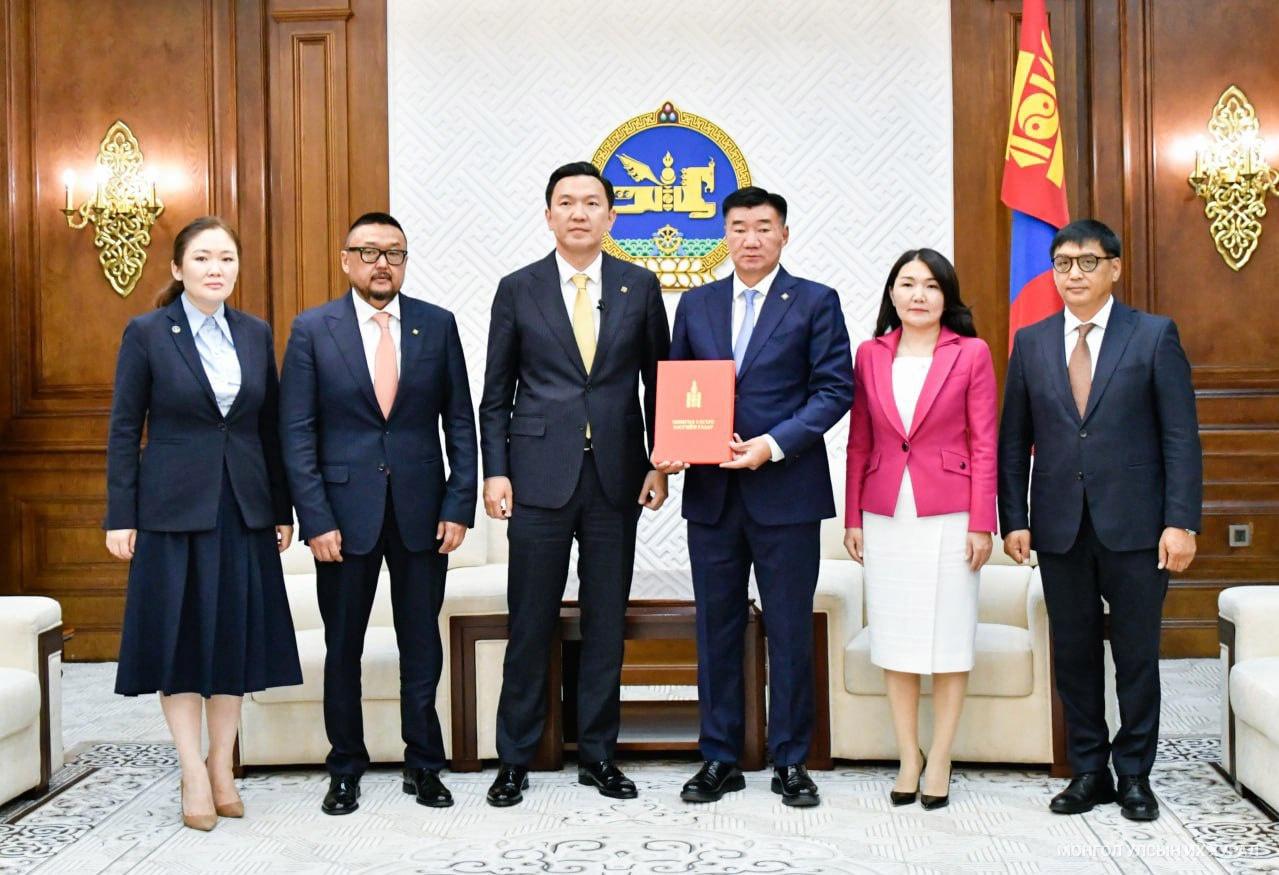
The Government of Mongolia submitted the draft 2027 Budget Law to the State Great Khural on 31 August. Total expenditure reaches MNT 43.6 trillion, an increase of MNT 10.6 trillion, or 32.2%, on the previous year. Equalised revenue rises 29.3% to MNT 41.3 trillion, while the equalised balance is projected at a MNT 2.3 trillion deficit.
While the headline figures point to another year of large fiscal expansion, the more important question for investors is how Mongolia intends to finance its growing obligations while managing inflation, refinancing risk and access to international capital. The Government is seeking parliamentary approval to issue up to MNT 2 trillion of domestic government securities and up to USD 1 billion of foreign government securities in 2027. At the same time, Ulaanbaatar is seeking to refinance its USD 500 million foreign bond issued in 2024 with a government guarantee.
For investors, this points to a potentially another active year for Mongolian credit in 2027. However, the more significant development may be occurring on the other side of the capital structure: the Government’s cooperation with Franklin Templeton and its plans to bring selected state-owned enterprises to domestic and international capital markets. The combination creates two parallel investment themes for 2027: a larger supply of government and public-sector bonds, and the potential emergence of a new equity-oriented investment platform focused on Mongolian SOEs.
A larger refinancing requirement in 2027
The immediate challenge is debt service.
The draft budget identifies approximately MNT 5.99 trillion of principal repayments falling due in 2027, together with a further MNT 1.57 trillion of interest payments. The accompanying parliamentary resolutions provide for MNT 1.62 trillion of principal repayment on the “Century-1” bond, MNT 1.82 trillion of external loan principal and MNT 220.2 billion of domestic bond principal.
The external refinancing requirement is particularly important. Principal payments on the “Century 1–4” bonds are scheduled to total approximately USD 1.48 billion between 2027 and 2030, creating a recurring requirement for Mongolia to maintain access to international capital markets. Against this backdrop, the proposed USD 1 billion international bond issuance in 2027 should primarily be viewed as a debt-management and refinancing tool rather than a mechanism for financing additional fiscal expenditure. Mongolia is not simply increasing its borrowing capacity; it is seeking to refinance existing liabilities while managing maturity concentration, interest costs and foreign-currency exposure.
The Government’s Century-5 issuance in March 2026 provides a useful precedent. The USD 500 million six-year bond, issued at a 5.95% coupon, was used to refinance USD 321.6 million of existing obligations, including the Nomad bond maturing in 2026 and part of the Century-2 bond due in 2028. The transaction reduced future interest costs by approximately USD 14.5 million. The 2027 requirement is larger, making pricing and tenor increasingly important. A successful refinancing would extend Mongolia’s maturity profile and reduce near-term concentration risk. Conversely, a materially higher cost of funding could increase pressure on the fiscal position.
What does this mean for bond investors?
For fixed-income investors, 2027 could provide a broader opportunity set across sovereign, municipal and corporate credit. At the sovereign level, investors can expect the Government to remain active in both domestic and international markets. The proposed MNT 2 trillion domestic issuance creates additional supply of government securities, while the USD 1 billion international issuance ceiling provides capacity to refinance foreign-currency obligations. There is also additional potential supply from sub-sovereign issuers. The proposed ceiling for securities issued by provinces and the capital city is approximately MNT 2.56 trillion. This creates an interesting dynamic for Mongolia’s domestic bond market.
On one hand, greater government and municipal issuance can improve market liquidity, establish more observable yield curves and provide institutional investors with a broader range of instruments. A deeper sovereign curve can ultimately support pricing across the wider corporate bond market. On the other hand, increased public-sector issuance creates the possibility of crowding out private-sector borrowers, particularly if government securities offer attractive risk-adjusted returns in an environment of elevated interest rates.
This is particularly relevant given the current macroeconomic backdrop. Inflation reached approximately 13% in July 2026, prompting the Bank of Mongolia to raise its policy rate to 12.5%. At the same time, the Government is projecting 5.8% real GDP growth and inflation of approximately 8% in 2027. The resulting policy mix will be closely watched by fixed-income investors. Expansionary fiscal policy could sustain domestic demand and inflationary pressure at a time when monetary policy is attempting to remain restrictive. For investors, the implication is straightforward: 2027 bond opportunities are likely to come with a greater emphasis on duration, inflation and refinancing risk rather than simply headline yield.
City of Ulaanbaatar’s USD 500 million refinancing adds another layer
The Government has also submitted a proposal to provide a debt guarantee for the refinancing of a USD 500 million bond issued by the Capital City of Ulaanbaatar in 2024.
The bond was originally issued with a 2.75-year maturity and a 7.75% interest rate to finance the Selbe Sub-Center-based Ger District Housing Project. The financing structure has become challenging because the underlying project has experienced delays. Construction was originally expected to begin in 2024 and finish in 2026, but the tender process was delayed and the project is now expected to extend into 2028. As of August 10, 2026, reported completion stood at approximately 30.4%.
Could a Mongolia SOE fund emerge?
The memorandum of understanding between the Government and Franklin Templeton provides for cooperation on SOE valuation, governance, IPO readiness, investor demand, investment-fund structure and implementation planning. The Government has targeted bringing an initial portfolio to international capital markets by the end of 2027.
One potential outcome of this process is the formation of an SOE-focused investment fund or investment vehicle, although the precise structure has yet to be determined. A fund could accelerate capital mobilisation and provide diversification, but would require credible valuation and governance standards. Individual IPOs could provide stronger price discovery and transparency but would require each company to meet international investor expectations independently. A hybrid structure could offer greater flexibility but would be more complex to execute.
The ultimate structure will depend on how the Government balances capital raising, strategic ownership, governance reform and investor protection.
2027 could become a transition year for Mongolia’s capital markets
The 2027 budget provides an early indication of the capital-market supply and investment landscape for the year ahead. For bond investors, the immediate opportunity lies in potentially larger sovereign and public-sector issuance, with refinancing transactions likely to remain central to Mongolia’s debt-market activity. For equity investors, the more significant opportunity could emerge from SOE reform and the potential creation of an investment platform supported by Franklin Templeton. For Mongolia, the challenge is to ensure that these two processes reinforce rather than undermine each other.
A successful 2027 would see the Government refinance its upcoming maturities at sustainable costs, maintain investor access despite elevated global and domestic rates, and simultaneously establish credible pathways for SOEs reform.
That would represent a meaningful shift in Mongolia’s financing model: from relying primarily on sovereign and corporate debt toward a broader capital-markets ecosystem combining sovereign bonds, corporate debt, IPOs, strategic investment and institutional funds.
For investors, 2027 may therefore be less about whether Mongolia will issue more debt and more about whether the country can begin converting its substantial state-asset base into investable securities.

.webp)