Fitch on Mongolia: Stronger Fundamentals, Narrower Room for Error
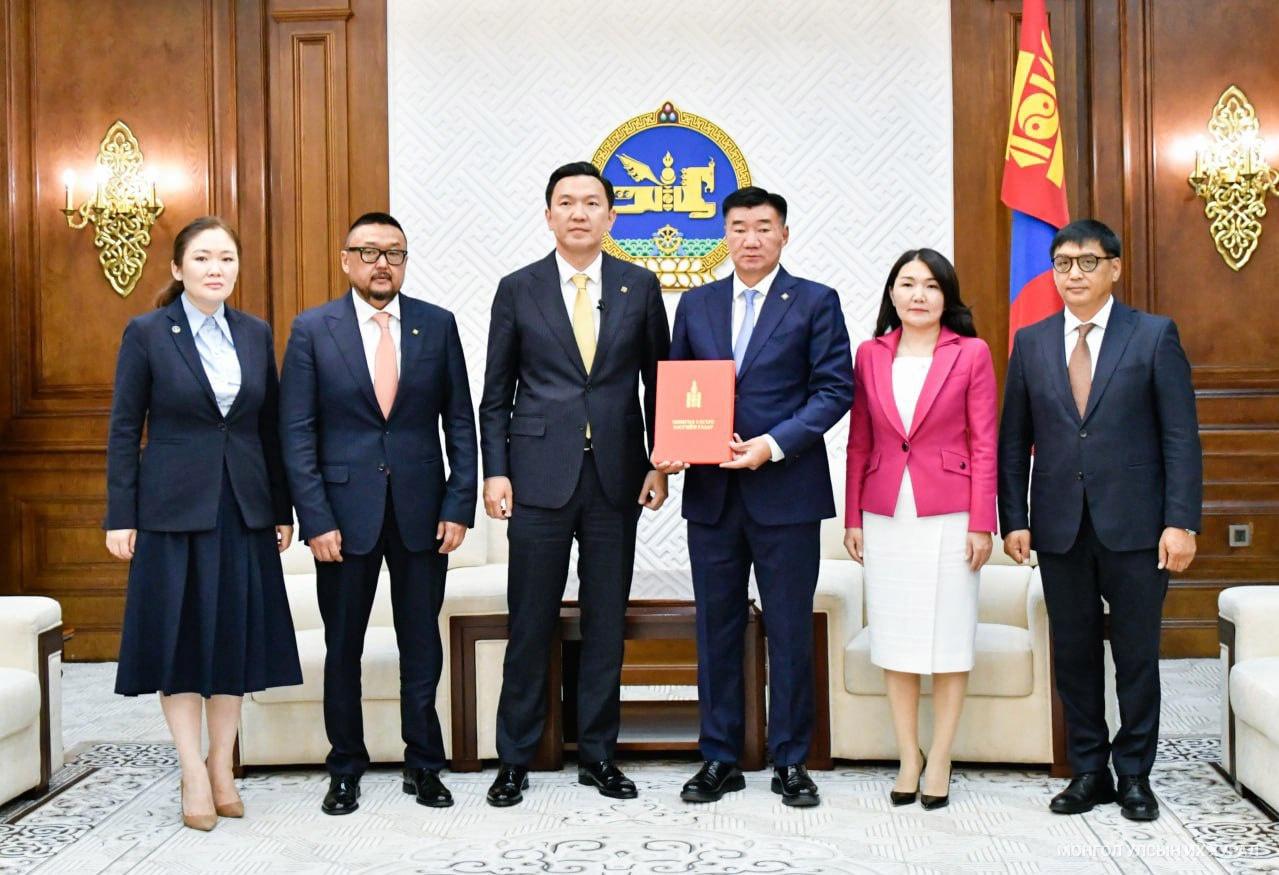
Last week marked the 10 year anniversary of the Fitch’s Fitch on Mongolia event, where Fitch shares its perspective on the country's economic outlook, sovereign credit profile, banking sector developments, sustainable finance initiatives, and capital markets trends. This year's main theme was Opportunity, Risk and Resilience, the discussion was surrounded on the same question: can Mongolia convert a favourable commodity cycle into durable fiscal and financial resilience, rather than another period of pro-cyclical expansion?
That question matters beyond the sovereign. It affects the refinancing environment for Mongolian issuers, the cost of external capital, the pace of domestic financial-market development, and ultimately how investors price Mongolia.
Mongolia is entering another strong mining cycle from a materially better starting point than it did a decade ago. Foreign-exchange reserves are higher, government debt has fallen sharply as a share of GDP, and the export base is becoming more diversified as copper gains importance alongside coal and gold.
But the improvement in the starting position does not remove the old vulnerabilities.
Below are our key takeaways from the event, including the Q&A and related points raised in the Mongolian Stock Exchange presentation.
A stronger starting point than previous cycles
Mongolia enters the current mining upswing from a considerably stronger position than during earlier commodity booms.
Fitch's data show government debt declining from roughly 80% of GDP in 2017 to around 40% in 2025. Foreign-exchange reserves have also strengthened materially, while stronger mining output has supported both export receipts and fiscal revenues.
That is a meaningful improvement.
Fitch currently views Mongolia's debt burden as manageable. But the direction of travel is worth watching: its forecasts show the debt ratio beginning to edge higher through 2028. In other words, the period of rapid deleveraging appears to be behind us.
The composition of exports has improved as well. Copper is becoming a larger contributor alongside coal and gold, providing a broader source of foreign-currency earnings.
The distinction is important. Mongolia is not entering the next cycle from the same balance-sheet position as the last one. But a stronger starting point does not automatically translate into stronger outcomes.
The debt ratio has improved. The currency exposure has not.
The headline debt number tells only part of the story.
Mongolia's public debt remains overwhelmingly denominated in foreign currency, with only a small portion in tugrik. Fitch therefore continues to identify exchange-rate exposure as a structural vulnerability. A significant depreciation of the tugrik can increase the local-currency value of external debt without any additional borrowing taking place.
The refinancing profile creates a second pressure point.
Fitch's schedule indicates general government external debt service of approximately USD 0.7–0.9 billion per year through 2029, rising to around USD 1.1 billion in 2030 and 2031. Bonds account for a substantial portion of these maturities. This means Mongolia's sovereign credit story remains closely connected to global capital-market conditions. A country can improve its fiscal position and still face a difficult refinancing environment if global rates remain high and investor appetite for frontier-market credit weakens.
Inflation is back in the conversation
Another theme was the return of price pressures.
After easing through 2024 and 2025, inflation has picked up again, with energy and food prices contributing to the increase. Inflation has moved back towards the level of the policy rate. At the same time, real credit growth to individuals, while below its recent peak, remains elevated. Private-sector credit relative to non-mining output is also high. The combination matters because strong domestic demand limits the room for monetary easing.
The real test is fiscal discipline
For us, this was the central issue of the event. The risk is not higher mining revenue itself. The question is what policymakers do with it. Mongolia has experienced this cycle before: stronger commodity prices improve fiscal revenues, spending expands, and the economy becomes more exposed when commodity conditions subsequently weaken.
Fitch's rating sensitivities make this explicit.
A potential positive rating driver is prudent fiscal policy that reduces pro-cyclicality and builds fiscal buffers. Conversely, a significant increase in debt-to-GDP resulting from sustained fiscal deficits would place pressure on the rating.
The political calendar adds another layer.
Presidential and parliamentary elections are scheduled for 2027 and 2028, respectively. That creates an extended electoral cycle during which spending pressures can become more difficult to contain. Fitch also highlighted the potential for political divisions to complicate decisions around sensitive areas such as resource management. There is, however, an important counterpoint. Fitch's governance indicators place Mongolia above the 'B' median on political stability and voice and accountability. The picture is therefore not one-dimensional. Mongolia has improved materially in some governance and fiscal metrics, while the next test will be whether those improvements hold through another politically sensitive period.
The structural exposures have not gone away
Mongolia remains highly exposed to factors outside its control.
Around 90% of foreign-currency export earnings are linked to mining, while approximately 30% of government revenue is connected to the sector.
China remains Mongolia's dominant export market.
That creates a familiar transmission mechanism:
Commodity prices → mining output → China demand → export receipts → fiscal revenue → domestic growth.
A negative shock can therefore move through several parts of the economy simultaneously.
Fitch identifies significant external stress from a commodity shock combined with expansionary domestic policy among its negative sensitivities. It also identifies policy shifts that disrupt strategic mining projects or FDI inflows as a potential source of pressure. At the same time, Fitch maintains a favourable view of Mongolia's medium-term growth prospects.
The takeaway is not that the structural risks have disappeared. It is that Mongolia's growth potential remains strong despite them.
The budget will be watched closely
During the Q&A, we asked Fitch whether the recently introduced preliminary budget, if implemented as proposed, could have implications for the sovereign rating. Fitch noted that the budget was higher than expected. Its baseline already incorporated some increase in spending associated with the electoral cycle.The distinction is therefore between some degree of electoral-cycle spending, which is already incorporated into expectations, and spending materially beyond current projections.
The latter would warrant closer scrutiny of the rating. Our reading is that Mongolia has some tolerance for cyclical fiscal pressure, but that tolerance is not unlimited. With two elections ahead, the next few budgets will therefore matter disproportionately.
Global rates could make 2027 a harder year for issuers
The external funding environment may become another constraint.
The prevailing expectation among participants was that the US Federal Reserve could raise rates at least once next year, with Fitch indicating that two hikes remains a realistic possibility. For frontier-market issuers, the implication is straightforward. If US rates remain elevated, the high-yield market is likely to remain structurally more expensive. That affects both the supply of new paper and the willingness of investors to add risk.
For Mongolia, the timing matters.
The sovereign and corporate refinancing requirements described above mean that Mongolia cannot completely separate its funding costs from the global rates cycle. We would therefore expect 2027 to be a more selective year for new international issuance, particularly for lower-rated or first-time issuers. Existing borrowers with upcoming maturities will need to think beyond simply accessing the market when the maturity date approaches.
Preparation, timing and investor communication become increasingly important when the market is less forgiving.
Disclaimer: This note reflects the opinions and interpretations of Capital Markets Mongolia based on discussions and materials presented at the Fitch Mongolia 2026 event. Certain facts and views may differ from actual circumstances or the official positions of Fitch Ratings. Figures read from presentation materials are approximate. This note is provided for informational purposes only and does not constitute investment advice, a recommendation, solicitation, or offer of any kind.