Parliament Approves 2027 Budget with MNT 2tn in Cuts
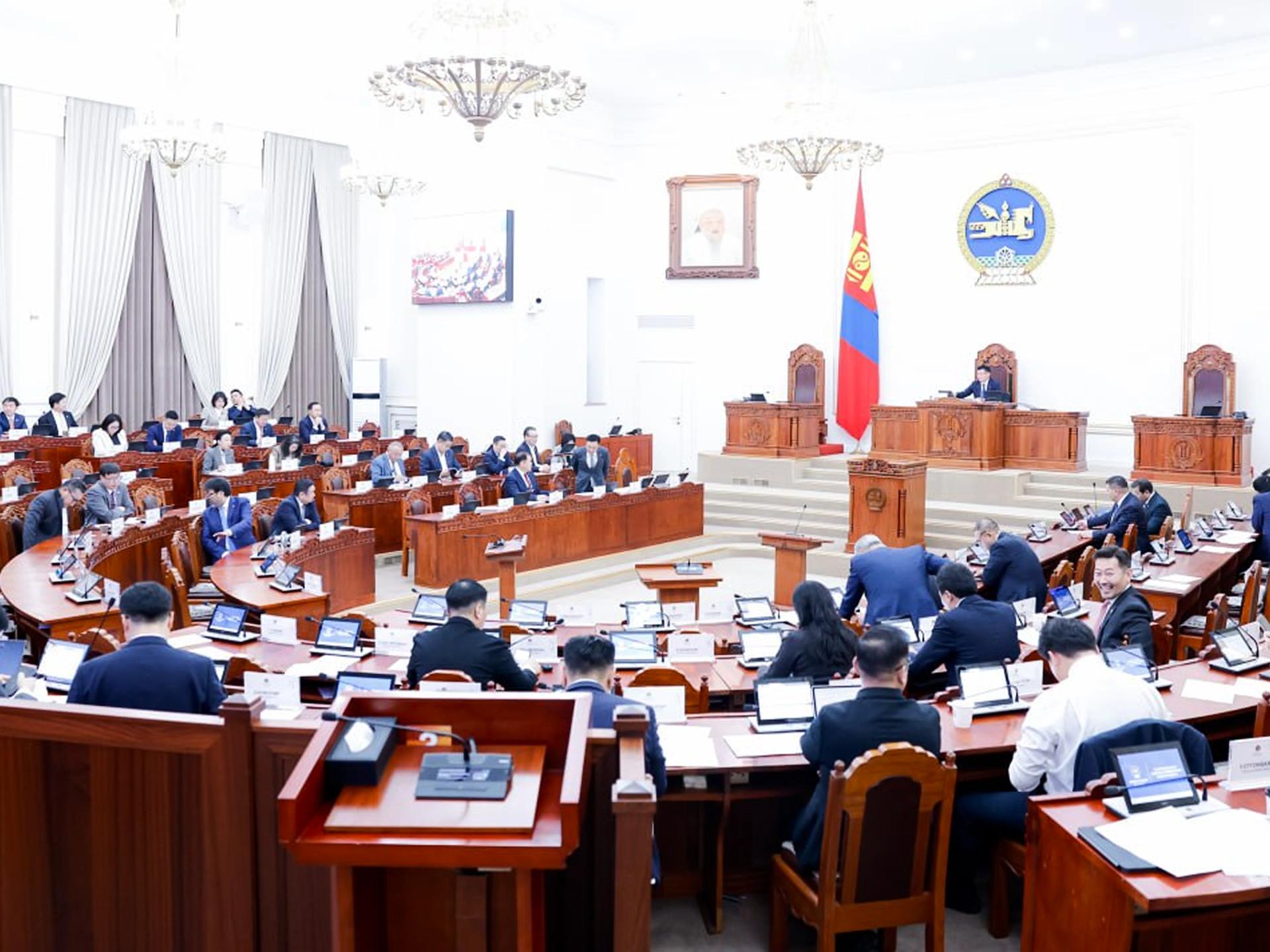
The 2027 budget package was submitted to Parliament on 31 August, but much of the parliamentary debate was spent elsewhere. The delayed 2026 budget amendment took up a significant share of plenary time, while the dispute over the allocation of Oyu Tolgoi dividends overshadowed much of the budget debate. The final decision on the dividend allocation came only days before the budget vote.
With the package now approved, this article looks at the final figures, the main changes made during parliamentary deliberations and the risks facing implementation.
The 2027 Budget at a Glance
The package covers four bills: the State Budget, National Wealth Fund, Social Insurance Fund and Health Insurance Fund.
The approved fiscal framework sets the following figures for 2027:
- Revenue: MNT39.28tn, equivalent to 34.1% of GDP.
- Expenditure: MNT41.586tn, or 36.1% of GDP.
- Deficit: MNT2.306tn, equivalent to 2.0% of GDP, within the statutory 3% ceiling.
- Government debt: MNT57.65tn, or 50.0% of GDP, below the statutory 60% ceiling.
- Macroeconomic assumptions: Real GDP growth of 5.8% and inflation of 8%.
The figures represent a reduction of approximately MNT2tn in both revenue and expenditure compared with the Government's initial budget proposal of MNT41.28tn and MNT43.586tn, respectively.
Despite the revisions, the budget continues to provide for substantial public expenditure, with mining revenues remaining central to its financing assumptions.
What Changed During Parliamentary Deliberations
Three developments stand out.
Oyu Tolgoi dividends. The Government initially planned to allocate MNT1tn of anticipated Oyu Tolgoi dividends to the National Wealth Fund's Savings Fund and MNT 2tn to infrastructure and social projects through the State Budget. On 23 October, the Government withdrew the proposed MNT 2tn allocation following a public poll. Parliament formally removed it from the budget on 6 November.
Public investment cuts. The MNT 2tn cut fell on capital spending, according to the Fiscal Stability Council, which noted that it lowers nominal GDP and is likely to affect the deficit and debt indicators. The Council said the effect has to be calculated and reflected in the framework statement.
Operating expenditure and social spending. Other government operating expenditure was reduced by 6.5%, while salaries, child benefits, social insurance, welfare and other protected social spending were largely maintained. As capital expenditure fell, current expenditure remained at MNT 33.583tn, and the Fiscal Stability Council said its share of total expenditure rose from 77.1% to 80.8%.
Key Issues Behind the Budget
Mining revenue dependence. Coal and copper remain central to the Government's revenue projections. Under Annex 1 of the 2027 State Budget proposal, the Government set a coal export target of 110 million tonnes for 2027, compared with 90 million tonnes in 2025. Copper concentrate exports were projected at 2.1 million tonnes, against 2.3 million tonnes in 2025.
A narrower fiscal policy space. Current expenditure accounts for 80.8% of total spending, much of it consisting of salaries and transfers that are difficult to reduce. This leaves less flexibility to adjust spending if mining revenues underperform or additional fiscal pressures emerge. Meanwhile, the reduction in capital expenditure could delay infrastructure delivery and affect future growth.
Inflation and implementation. The 8% inflation assumption for 2027 is below the 13.4% annual rate recorded in October 2026. If inflation remains elevated, expenditure pressures could intensify, particularly in public-sector wages and social spending.
What Happens Next
With Parliament's approval secured ahead of the 15 November deadline, attention shifts from legislative negotiations to implementation. The final enacted budget and detailed expenditure annexes will provide greater clarity on allocations across ministries, projects and public funds.
From 1 January 2027, investors should monitor fiscal execution and progress against budget targets. Whether the Government can maintain its 2% deficit target will depend on revenue performance and its ability to contain expenditure growth within the approved fiscal framework.