The stakes of Mongolia’s next presidential election.
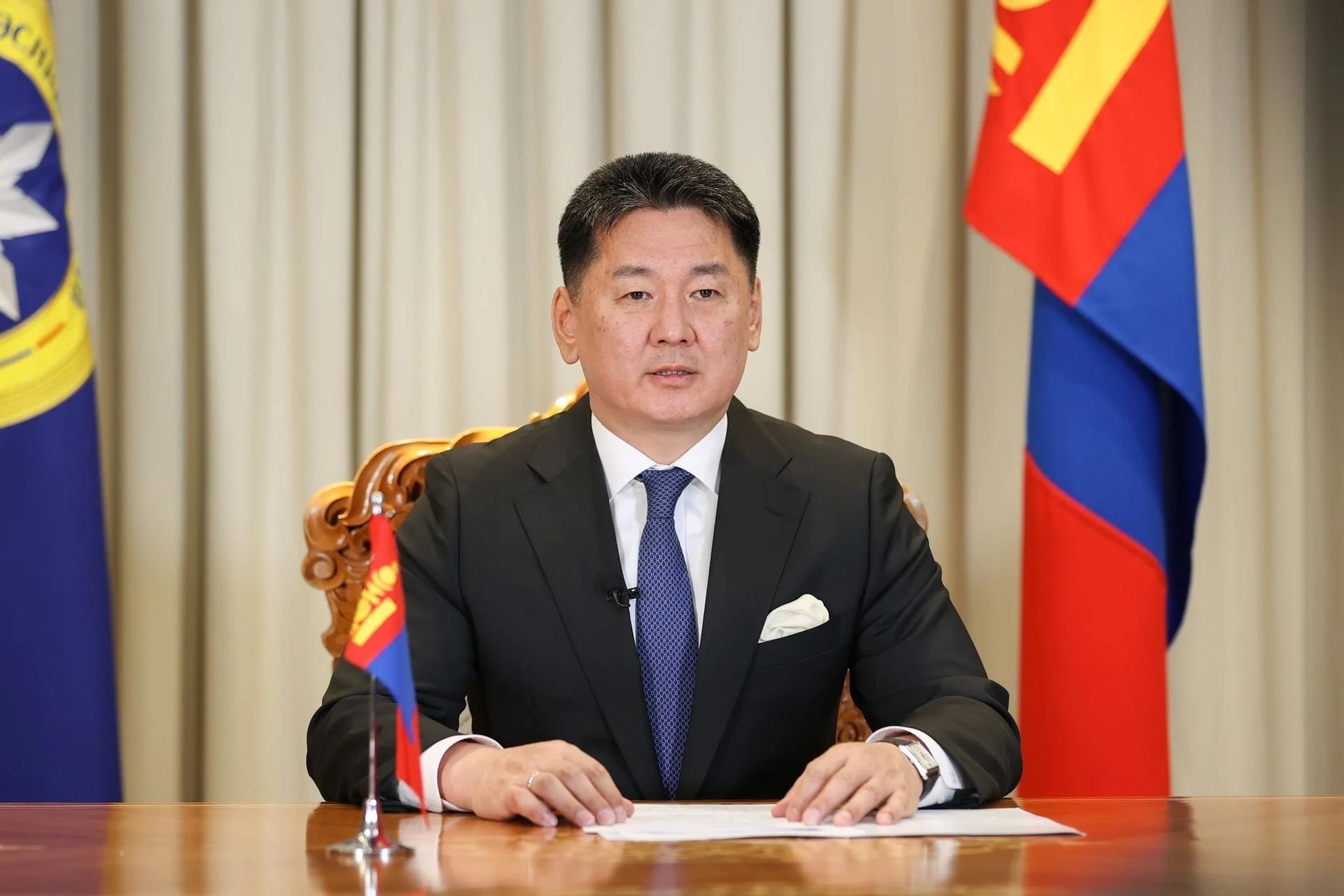
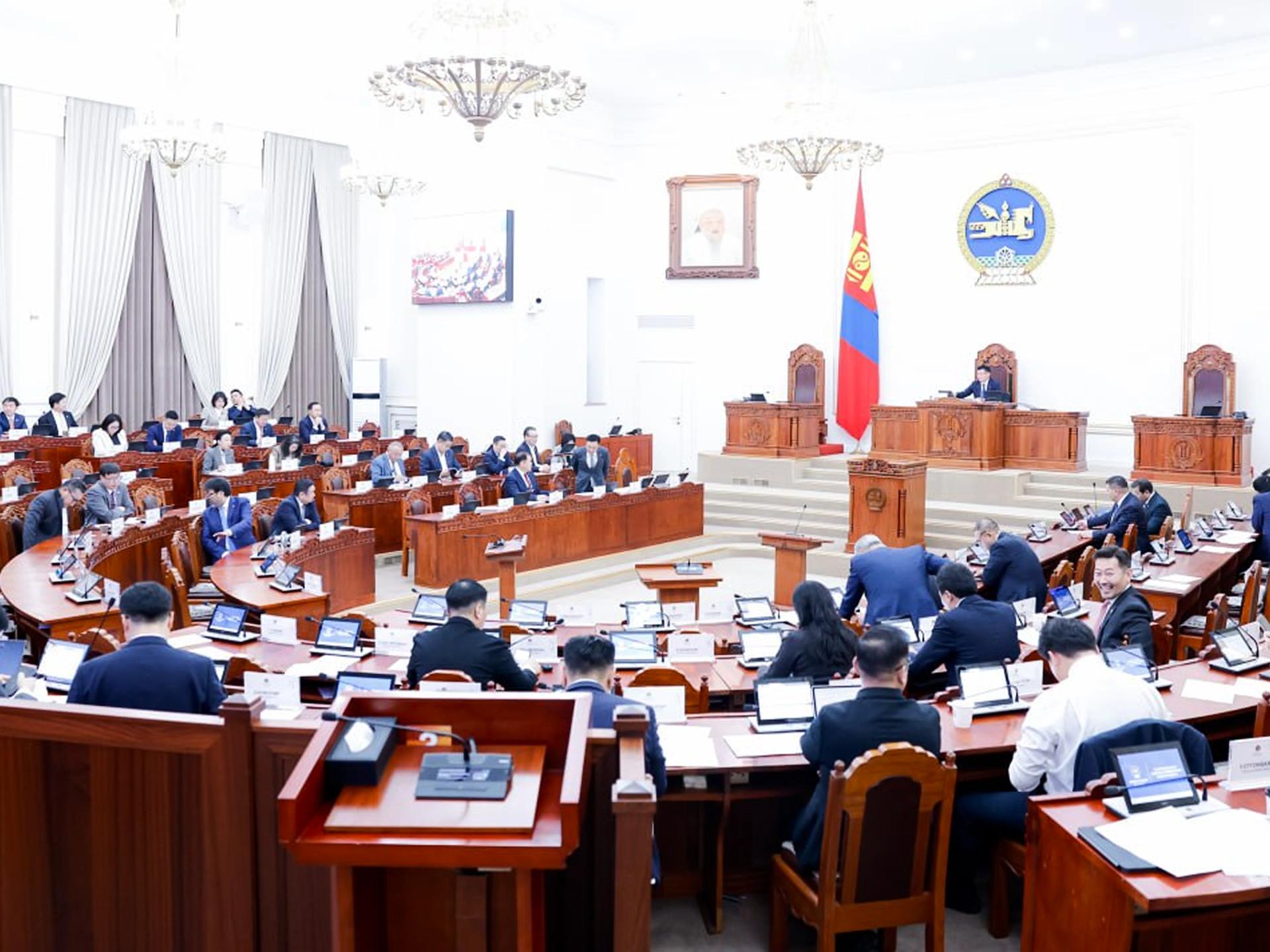
On 19 November, Parliament voted to end President Khürelsükh U.’s term, with 96 of the 104 MPs present (92%) supporting the decision. Under Article 37.2, an early presidential election must take place within four months, by 19 March 2027, instead of the originally scheduled June.
But this is not simply about replacing one president. The next president will serve a single six-year term, spanning through three parliamentary compositions: the current Parliament and those elected in 2028 and 2032. This election will hence shape Mongolia’s political balance and stability far beyond the current political crisis.
One President, Three Parliaments
A President elected in March 2027 will serve across three parliamentary compositions:
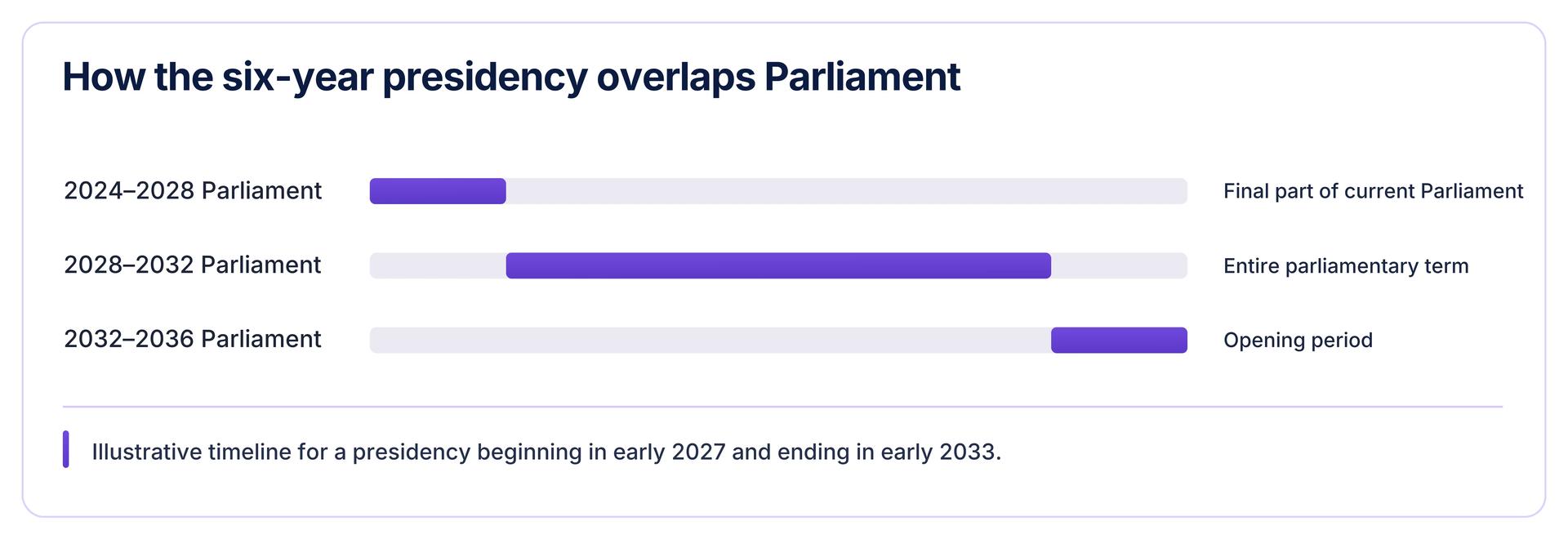
While Members of Parliament serve four-year terms, citizens directly elect the President for a single six-year term under Article 30.2, with no possibility of re-election. This means a new parliamentary majority may arrive with a fresh mandate yet find itself constrained by an immovable President elected under a different political balance. Unless the President resigns voluntarily or is impeached, Parliament cannot simply vote to remove them mid-term.
The six-year term may provide continuity, but it does not necessarily guarantee policy stability. Much will depend on the President’s relationship with successive parliaments, particularly when their political priorities diverge.
Two Offices, One Officeholder
The transition places an unusual concentration of power in one person’s hands. Under Article 37.2, Parliament Speaker Byambatsogt S. will exercise presidential powers from the moment Khürelsükh’s resignation takes effect until his successor takes office. Articles 11.4 and 11.5 of the Law on the President provide for the Speaker to exercise the President’s full powers, subject to parliamentary deliberation on the arrangement. This means one person will oversee Parliament while exercising the powers of a separate constitutional office. Although the Constitution provides for this arrangement, differing interpretations of how these provisions should be applied emerged during Parliament’s 19 November session, prompting further questions over the legal basis of the arrangement and the separation of powers during the transition.
The arrangement also raises questions about Byambatsogt’s potential candidacy. Neither the Constitution nor the Presidential Election Law prevents an acting President from becoming a candidate. However, under Article 27.1 of Presidential Election Law, candidates must be nominated by political parties. This means Byambatsogt would first need to secure the MPP’s backing. A September 2026 public opinion survey placed former PM Zandanshatar G. ahead of Byambatsogt among potential MPP candidates. Then whether his time as acting President changes the party's calculations remains to be seen.
The First Contest is Within Parties
Before voters choose the next President, the parties must decide who gets on the ballot. Under Article 31.2, every party holding seats in Parliament can nominate one candidate, alone or jointly, regardless of its seat count. This gives smaller parties such as the National Alliance, with only four members, and the Civil Will-Green party the same nomination right as the MPP and DP, while excluding independent candidates and parties without parliamentary representation.
For the ruling MPP, Khürelsükh’s own party, that process could be particularly difficult. Its internal divisions, often described as a 30-38 split among its 68 MPs, have contributed to parliamentary boycotts, delayed proceedings and disputes over government appointments throughout 2026. While party officials keep denying the split, September reports suggested factions within the MPP were regrouping around potential presidential candidates.
The sudden resignation now brings that contest forward. In June, the MPP said to consider grassroots and public opinion when selecting its nominee. But whether this remains possible under a shortened timeline, or gives way to negotiations among party leaders, remains an open question. PM and MPP Chairman Uchral N. added another condition during his statement on 18 November that:
“I would like someone who has never been implicated in a crime to be nominated for president.”
Uchral acknowledged that guilt is for the courts to determine but argued that politicians linked to corruption and ethical violations can escape investigation. The distinction between allegations and convictions matters. Without clear criteria, however, the standard risks becoming a political tool against rivals rather than a test of accountability. The MPP will need to show that it applies the same standard to its own candidates. The opposition faces the same challenge, making candidate selection an early test of other parties’ commitment to political accountability.
The Politics of Presidential Power
Political parties may choose their presidential candidates based on today’s calculations, but the consequences will extend beyond the current Parliament. Political alliances that support a candidate today may no longer exist after 2028 or 2032, while the President will retain the same six-year mandate and constitutional powers.
This matters particularly for policy continuity. According to Article 33, the President can veto laws and parliamentary decisions, either partially or in full. Parliament can override a veto with a two-thirds majority of MPs participating in the sitting. The 2024 veto demonstrated this influence: Khürelsükh’s veto of the 2025 budget forced Parliament to withdraw the original legislation and approve a revised version. A future President could use the same authority against legislation backed by a different parliamentary majority, potentially delaying fiscal policy and structural reforms.
Political alignment does not necessarily guarantee better outcomes. A President from the governing party may facilitate cooperation but could also weaken independent scrutiny. Nor does shared party affiliation guarantee political unity, as the latest MPP crisis has shown. Conversely, disagreement between the two offices does not automatically mean instability. Because presidential oversight can act as an institutional check, even when it complicates policymaking. What matters, therefore, is not merely political alignment but how these powers will be exercised as Mongolia’s political balance changes.
The Stakes Beyond the Election
For investors, the main concern is not who wins the election, but whether the transition creates delays and how the next President works with successive parliaments.
- Candidate selection: The MPP’s choice will indicate whether internal divisions are being resolved or carried into the election. A decision shaped by factional bargaining could deepen tensions and complicate relations with the next government.
- Watch for delays: The shortened election timetable, MPP divisions and the Speaker’s dual role could slow major legislation and government decisions in the months ahead. The immediate risk is uncertainty over timing, not necessarily a change in policy direction.
- Factor in presidential veto risk: A President elected in 2027 could challenge budgets, mining legislation, tax measures and SOE reform backed by the 2028 or 2032 parliaments. This makes policy continuity a key consideration for long-term investments.
The election is taking place ahead of schedule, but the mandate it establishes will shape Mongolia’s political landscape beyond the immediate need to resolve the current crisis.
Disclaimer: This independent article represents the author’s own research and views. It does not represent the official views or policies of any affiliated organizations, research groups, or partner institutions.